Less is More: Why We Built Generative Photo Apps
Jan 9, 2026
/
5 min. read
Everyone knows how to take a photo. Point, tap, done. So why are we asking people to write essays to AI models?
When we launched Labubufy and SSENSELESS, we watched users skip the prompts entirely—they just wanted to show us what they meant. That's when we realized: the camera isn't just an input method. It's the entire interface.
The Camera Is the Interface
Smartphone users take photos constantly. There's no learning curve, no prompt engineering, no "AI literacy" required. Point, tap, image.
Photo-first apps work because they meet people where they already are. Your phone is in your hand. The camera app is one swipe away. And the mental model is intuitive: this is what I have, show me what it could become.
The friction of typing out instructions disappeared entirely when the camera became the input mechanism.
From Experiments to Utility
Taking what we learned from those early projects, we built six new mini-apps—each designed around a specific, practical use case where a photo is the fastest path to a professional result.
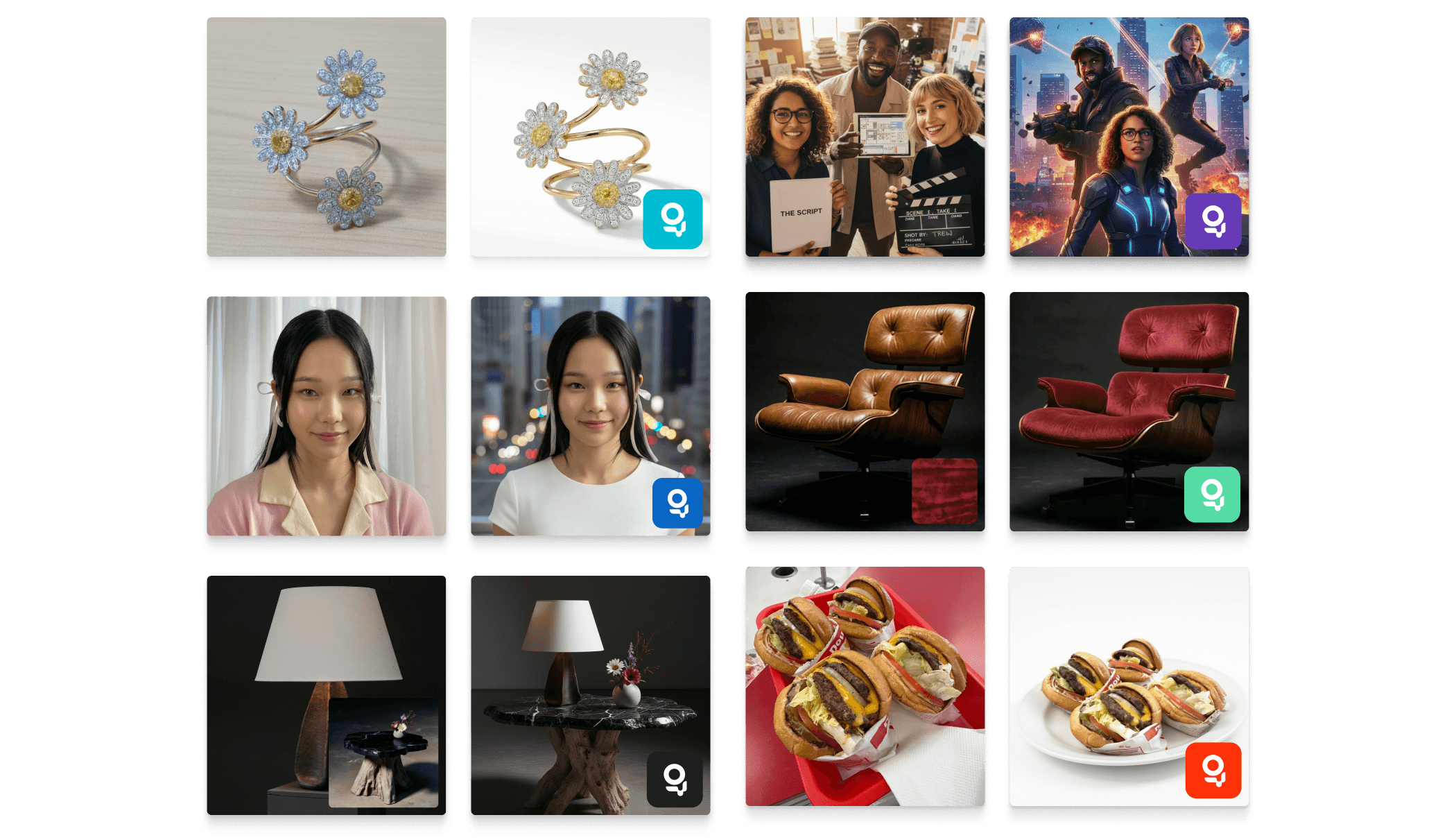
Gemify generates 4K lightbox photography for jewelry. Upload a shot of your piece, get studio-quality images ready for your product catalog. A Persian jewelry brand used Gemify to shoot their entire upcoming collection—no studio rental, no photographer day rate, no post-production back-and-forth. Just 4K lightbox shots ready for their site.
easyPDP creates instant product detail page photos. E-commerce operators know the pain of consistent product imagery at scale. easyPDP standardizes your catalog visuals from a single reference shot.
LinkedInPro turns casual photos into professional headshots. That networking event is tomorrow and your LinkedIn photo is from 2019. Snap a selfie in good lighting, get a polished headshot back in 30 seconds.
Stitchify reimagines upholstery. Wondering how that vintage chair would look in velvet? Take a photo and find out before you commit to a $2,000 reupholstery job.
Posterfy puts your AI filmmaking crew into a stacked-heads movie poster. Because every AI indie project deserves promotional materials that look like they came from a major studio.
Dashify produces beautiful menu photography. Restaurants hire food photographers for thousands, then update their menu two weeks later and need new shots. Dashify lets you photograph specials as they come out of the kitchen and have marketing-ready images before they reach the table.
Why This Works
When someone opens Gemify, they're not wondering "what can this do?" They know exactly what happens: jewelry photo goes in, studio-quality catalog shots come out. That certainty is what makes these tools feel less like AI experiments and more like professional equipment.
Users complete their first successful generation significantly faster with photo-first interfaces. The combination of familiar input and predictable output makes this feel less like AI and more like a specialized camera.
What Comes Next
We're treating these six apps as a proving ground. Each one is a hypothesis about where photo-first AI can add practical value—for small business owners creating marketing materials, for professionals updating their personal brand, for anyone who needs high-quality visual output without high-effort input.
The barrier to entry for generative AI just dropped to zero. If you have a phone, you have a studio, a design team, and a post-production crew. Point your camera and see what happens.