Inside Our Generative AI Hackathon at USD: Five Teams, Two Hours, Zero Excuses
Jan 9, 2026
/
5 min. read
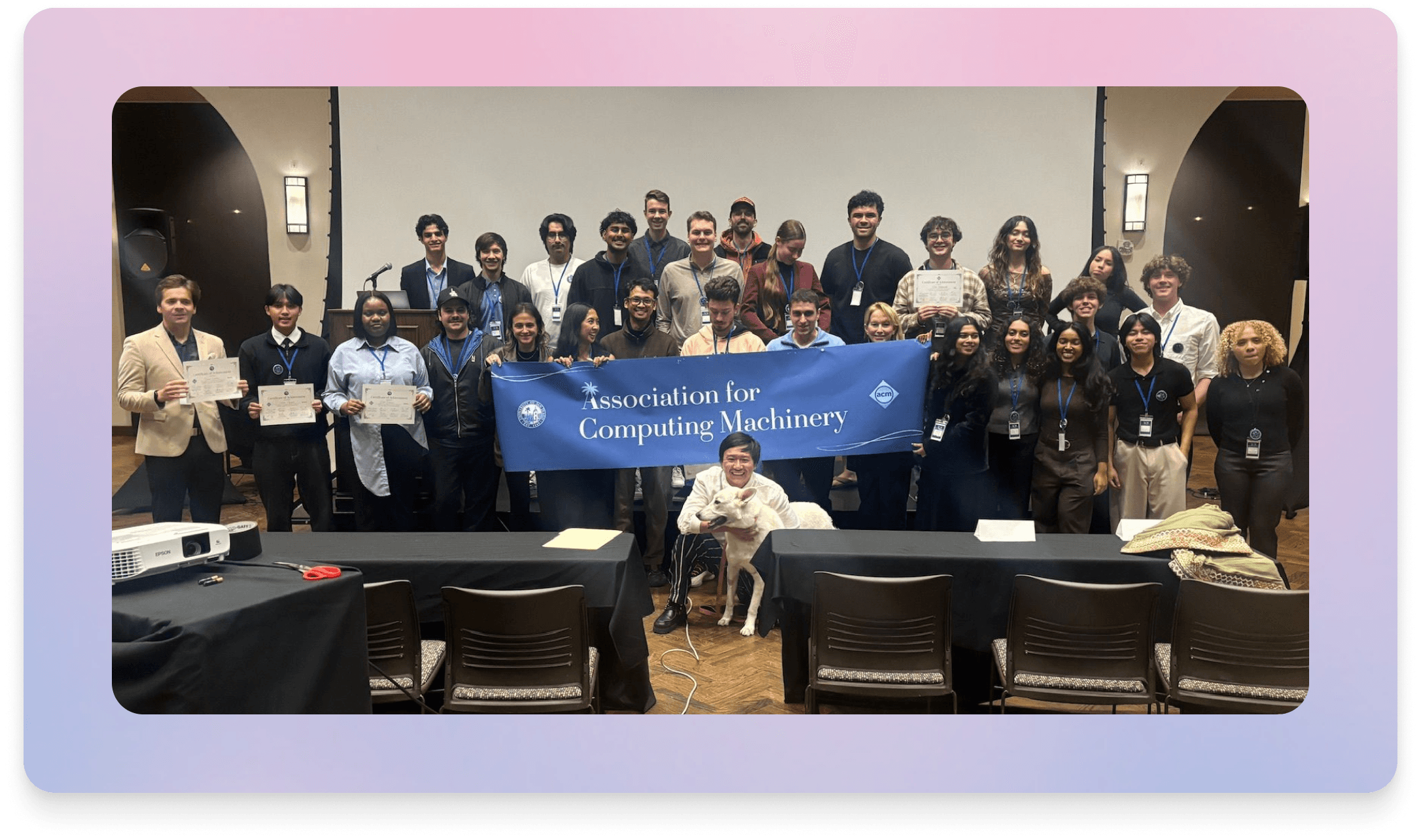
There's something electric about watching students discover that the tools they've been reading about can actually become the tools they build with. We partnered with the Computer Science Club at the University of San Diego to co-host a full-day Generative Hackathon—and what unfolded exceeded every expectation we had walking in.
A Day Designed for What's Next
The event was built around a single question: How do we prepare students to build with AI agents—autonomous systems that can reason, plan, and act on their own?
AI isn't a future consideration anymore. It's the present reality reshaping every industry, every workflow, every career path. We wanted to give USD students more than a lecture about that shift—we wanted to hand them the keys and let them drive.
The day kicked off with a series of panels and workshops. We started with the fundamentals: how multimodal models work, what's possible with current tools, and how natural language interfaces are changing software development.
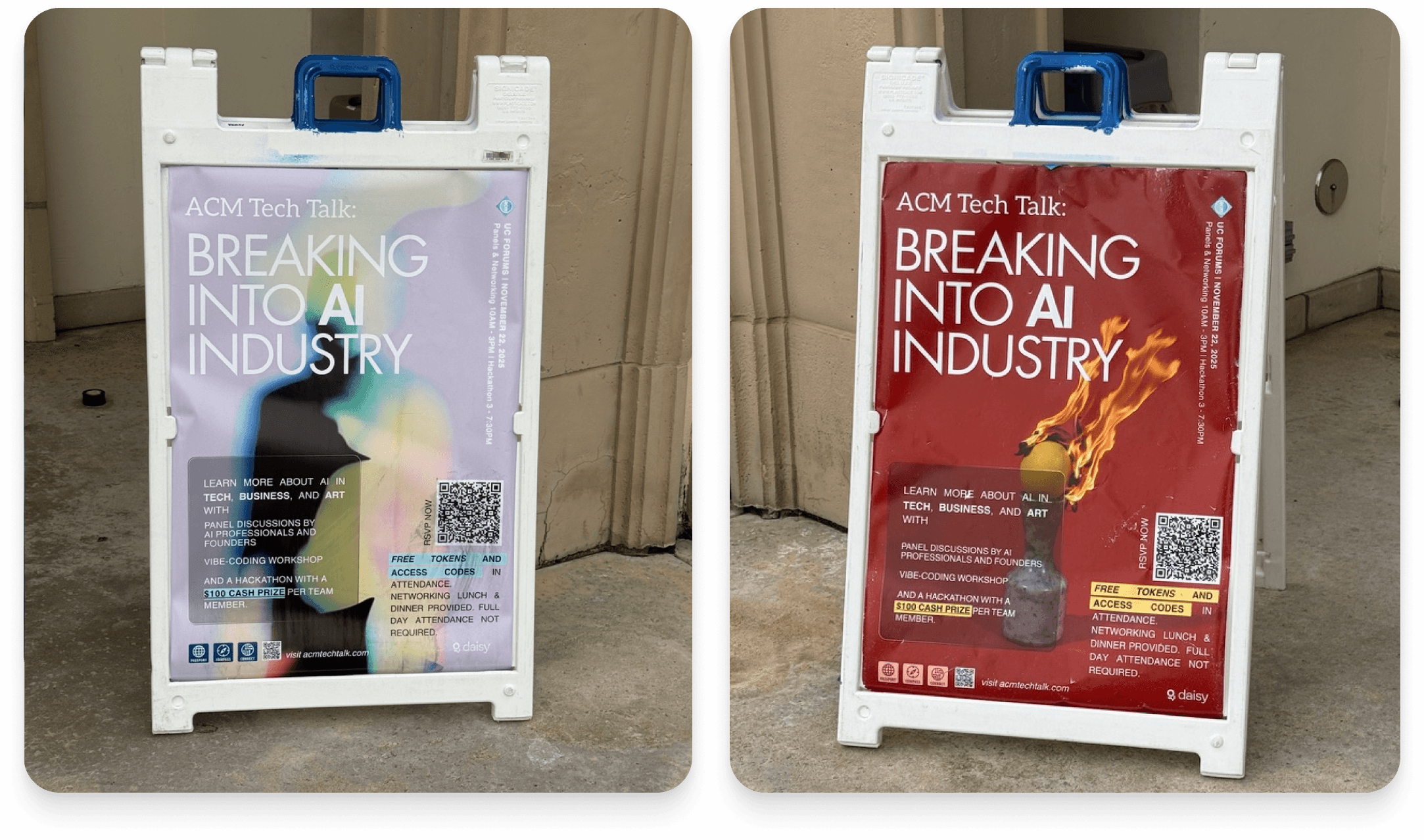
Then we introduced vibecoding—the practice of building software by describing what you want rather than writing traditional code line-by-line. For students used to wrestling with syntax errors, this was revelatory. We wrapped up with candid conversations about what it actually means to be an AI startup—the challenges, the pivots, and the hard-won lessons.
From Theory to Practice in Two Hours
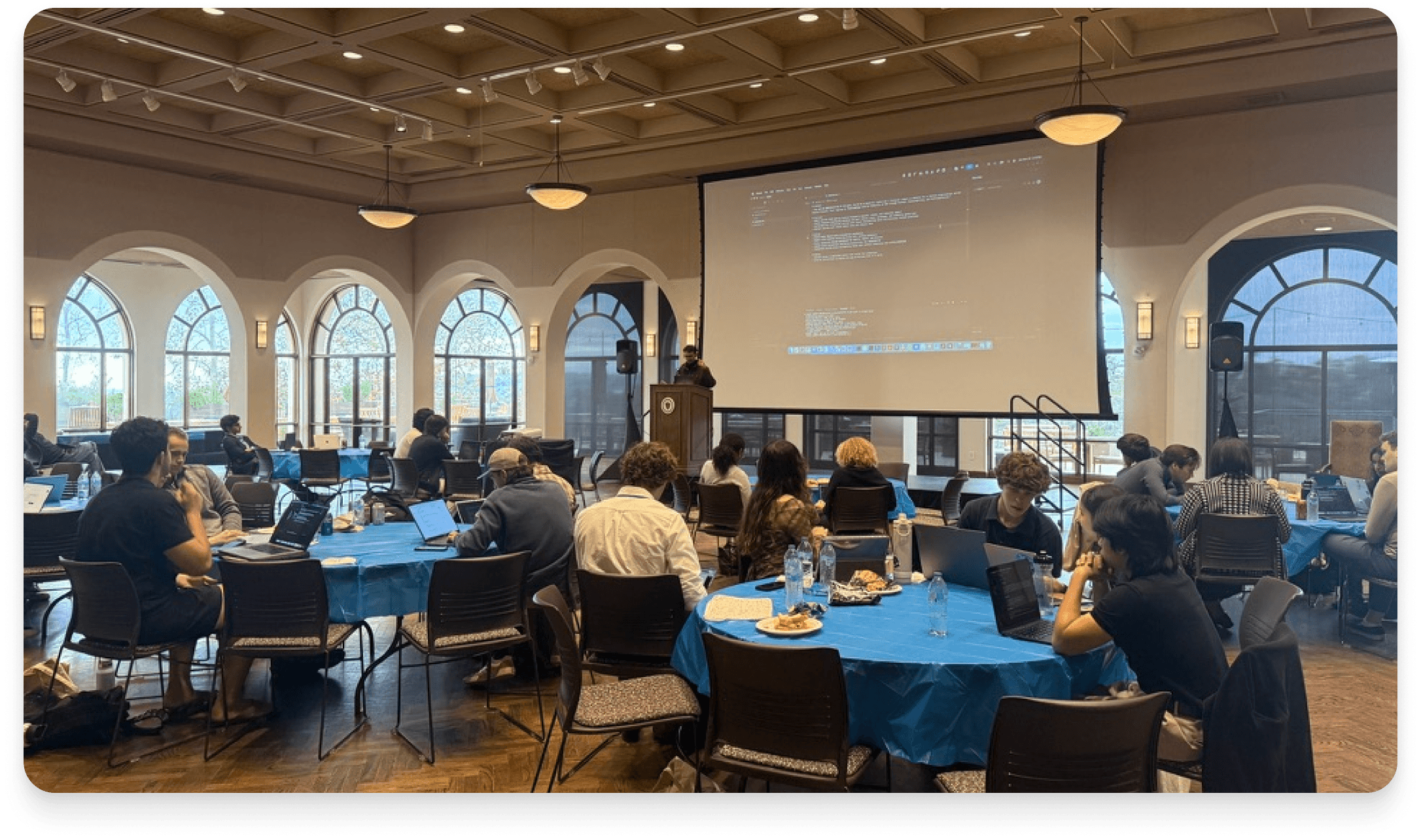
But the real magic happened in the final stretch: a two-hour hackathon where students put everything they'd learned into action.
The challenge was simple in premise, ambitious in scope: vibecode something that solved a problem unique to their campus, and use daisy's generative media studio to make it beautiful.
No hypotheticals. No toy projects. Real problems. Real solutions. Real deadline pressure.
Five Teams, Five Prototypes
Every single team delivered.
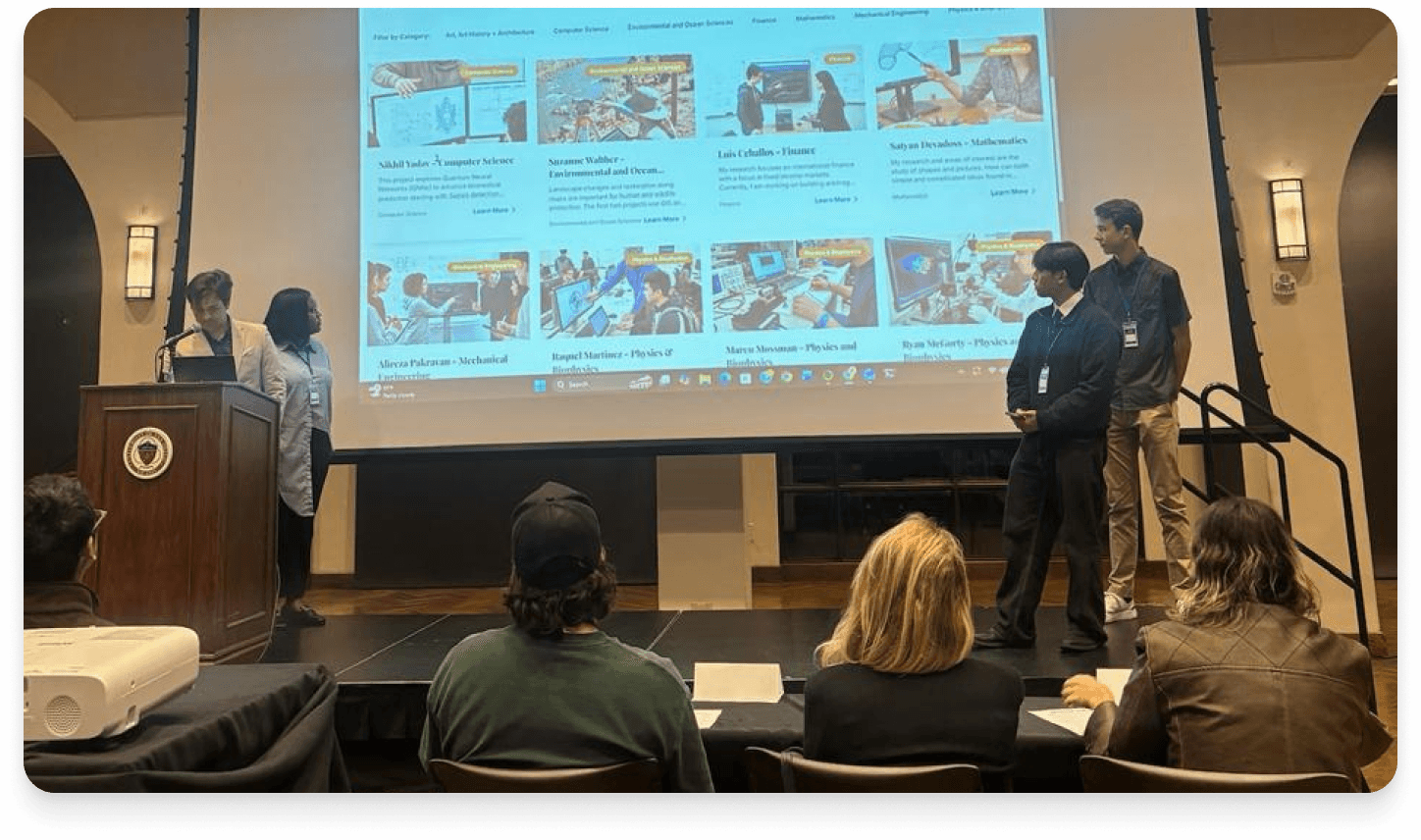
All five groups walked onto that stage with functioning app prototypes—built from scratch in just two hours. They demo'd live, explained their thinking, and showed what's possible when you combine emerging tools with fresh perspectives and genuine motivation.
The winning team tackled something beautifully practical: an age-old spreadsheet of paid research opportunities that had been circulating among students for years, perpetually getting lost in the semester shuffle. Valuable information, buried in a once a semester email that nobody could actually navigate.
Their solution? A live, searchable website featuring engaging visuals and live listings that transformed a forgotten Google Sheet into an accessible resource. They took friction and turned it into flow—exactly the kind of problem-solving that generative tools are uniquely positioned to enable.
Why This Matters
Here's what matters: every student who participated, no matter what year, proved to themselves they can build. Not someday when they "know enough"—right now. The barrier to creation has never been lower, and based on what we saw at USD, the next generation isn't waiting for permission.
Five teams. Five working prototypes. Two hours. The Computer Science Club at USD co-hosted this event, and every student who showed up proved what's possible when you give people the right tools and get out of their way. That's the kind of partnership we want more of.